
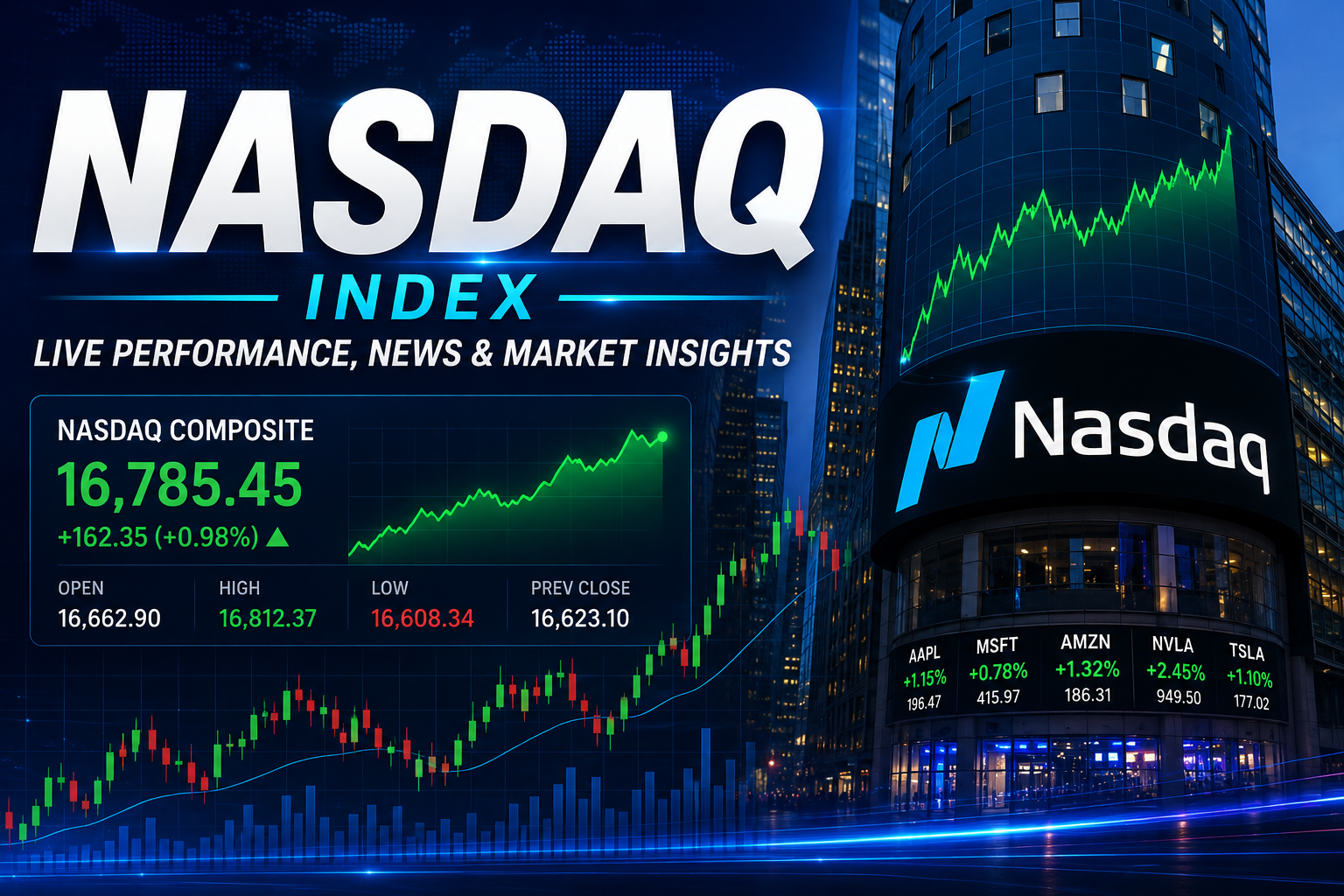

The Nasdaq Index is one of the world’s most influential stock market indexes, tracking many of the largest technology and growth companies in the United States. Investors, traders, and financial analysts closely monitor the Nasdaq Index: Live Performance, News & Market Insights to understand market trends, investor sentiment, and the performance of innovative businesses. This guide explains how the Nasdaq Index works, what affects its performance, and why it plays a vital role in global financial markets.
What Is the Nasdaq Index?
The term Nasdaq Index commonly refers to the Nasdaq Composite Index, which measures the performance of more than 3,000 stocks listed on the Nasdaq Stock Market. The index includes companies from various industries, but it is heavily weighted toward technology, communication services, healthcare, and consumer discretionary sectors.
Because many of the world’s largest technology companies trade on Nasdaq, the index is often viewed as a benchmark for the technology sector and growth stocks.
How the Nasdaq Index Works
Unlike the Dow Jones Industrial Average, the Nasdaq Index is market-capitalization weighted. This means companies with larger market values have a greater impact on the movement of the index.
Some of the largest companies in the Nasdaq Index include leading businesses in:
- Technology
- Artificial Intelligence
- Cloud Computing
- Semiconductors
- E-commerce
- Biotechnology
- Digital Payments
- Consumer Electronics
As these companies grow or decline, their performance significantly influences the overall index.
Why Investors Follow the Nasdaq Index
Many investors monitor the Nasdaq because it provides valuable insights into growth-oriented sectors.
Key reasons include:
- Tracking technology stocks
- Measuring investor confidence
- Identifying market trends
- Monitoring innovation-driven companies
- Comparing portfolio performance
- Understanding economic sentiment
The Nasdaq Index is also widely used by mutual funds and exchange-traded funds (ETFs) as a benchmark.
Factors That Affect Nasdaq Performance
Several economic and financial factors influence the Nasdaq Index.
Corporate Earnings
Quarterly earnings from major technology companies often have a significant impact on the index.
Interest Rates
Growth companies are generally more sensitive to interest rate changes. Higher interest rates may reduce investor demand for growth stocks, while lower rates can support higher valuations.
Economic Data
Important reports include:
- Inflation data
- Employment reports
- GDP growth
- Consumer spending
- Manufacturing activity
- Retail sales
Strong economic data often boosts investor confidence, although markets can react differently depending on expectations.
Technology Industry News
Product launches, artificial intelligence developments, cybersecurity news, mergers, acquisitions, and semiconductor demand frequently influence Nasdaq performance.
Nasdaq Market Insights
Investors analyze several indicators when evaluating the Nasdaq Index.
Popular tools include:
- Moving averages
- Relative Strength Index (RSI)
- MACD
- Trading volume
- Market breadth
- Support and resistance levels
- Volatility indicators
These technical indicators help identify potential trends and market momentum.
Nasdaq vs. Other Major Indexes
The Nasdaq is often compared with:
Dow Jones Industrial Average
Tracks 30 large U.S. companies using a price-weighted methodology.
S&P 500
Tracks approximately 500 leading U.S. companies and provides broader market exposure through market-capitalization weighting.
Russell 2000
Focuses on small-cap U.S. companies and is commonly used to measure the performance of smaller businesses.
Each index offers a different perspective on the U.S. stock market.
Tips for Investors
When following the Nasdaq Index:
- Monitor long-term trends rather than daily price swings.
- Stay informed about major technology companies.
- Diversify investments across sectors.
- Review economic calendars before important announcements.
- Avoid making investment decisions based solely on short-term market movements.
Conclusion
This Nasdaq Index: Live Performance, News & Market Insights guide explains why the Nasdaq remains one of the most important stock market indexes in the world. By tracking thousands of listed companies, particularly in the technology sector, the Nasdaq provides valuable insights into market performance, innovation, and investor sentiment. Understanding its movements, market news, and long-term trends can help investors make more informed financial decisions.
Frequently Asked Questions (FAQs)
1. What is the Nasdaq Index?
The Nasdaq Index generally refers to the Nasdaq Composite Index, a stock market index that tracks the performance of more than 3,000 companies listed on the Nasdaq Stock Market. It is widely recognized for its strong focus on technology and growth-oriented companies.
2. How is the Nasdaq Index calculated?
The Nasdaq Index is market-capitalization weighted, meaning companies with larger market values have a greater influence on the index’s overall performance.
3. Why is the Nasdaq Index important?
The Nasdaq Index is an important benchmark because it:
- Tracks thousands of publicly traded companies
- Reflects the performance of the technology sector
- Measures investor sentiment
- Helps investors compare portfolio performance
- Provides insight into overall market trends
4. Which companies are included in the Nasdaq Index?
The Nasdaq Index includes companies from many industries, including:
- Technology
- Healthcare
- Biotechnology
- Consumer services
- Telecommunications
- Financial services
- E-commerce
- Artificial intelligence
Many of the world’s largest technology companies are listed on the Nasdaq exchange.
5. What factors affect Nasdaq performance?
Several factors influence the Nasdaq Index, including:
- Corporate earnings
- Interest rate decisions
- Inflation reports
- Federal Reserve policies
- Economic growth
- Technology industry developments
- Global market conditions
- Investor sentiment
6. Where can I view live Nasdaq performance?
Live Nasdaq performance can be tracked through:
- Financial news websites
- Stock market platforms
- Brokerage applications
- Financial television networks
- Market data providers offering real-time quotes and interactive charts
7. How is the Nasdaq different from the Dow Jones?
The Nasdaq Composite tracks more than 3,000 stocks and is market-capitalization weighted, while the Dow Jones Industrial Average (DJIA) tracks 30 blue-chip companies and is price-weighted. The Nasdaq has greater exposure to technology and growth stocks.
8. What is the difference between the Nasdaq and the S&P 500?
The Nasdaq Composite includes thousands of companies listed on the Nasdaq exchange, whereas the S&P 500 tracks approximately 500 of the largest U.S. companies across multiple stock exchanges. The S&P 500 provides broader market representation, while the Nasdaq is more heavily concentrated in technology.
9. Is the Nasdaq Index a good indicator of the technology sector?
Yes. Because many leading technology companies are listed on the Nasdaq exchange, the Nasdaq Index is commonly used as a benchmark for the performance of the technology industry and growth-oriented businesses.
10. Why are people searching for Nasdaq Index: Live Performance, News & Market Insights?
People search for Nasdaq Index: Live Performance, News & Market Insights to monitor live market performance, follow technology sector trends, stay updated with financial news, analyze market movements, and make informed investment or trading decisions based on current market conditions.